
Criminal Court Cases in Lamar County
Lamar County criminal court cases split by offense level. The 6th and 62nd Judicial District Courts hear felony matters, and the District Clerk keeps those files. The County Court at Law ordinarily handles Class A and B misdemeanors, with the County Clerk serving as custodian. A case number and court name are vital because each clerk controls a different file set.
The fine-only layer sits outside that split. Six justice-of-the-peace places keep their own matters, magistrations, and warrants. Paris Municipal Court preserves city traffic, parking, animal-control, ordinance, and other fine-only cases. A name search in one Lamar County court system can therefore miss a valid case in another. Start with the alleged charge level, then confirm the court printed on any notice, bond paper, or docket result.
The Lamar County Court at Law page provides the official local misdemeanor contact. The assigned courthouse image marks the separate misdemeanor route within Lamar County's court structure.
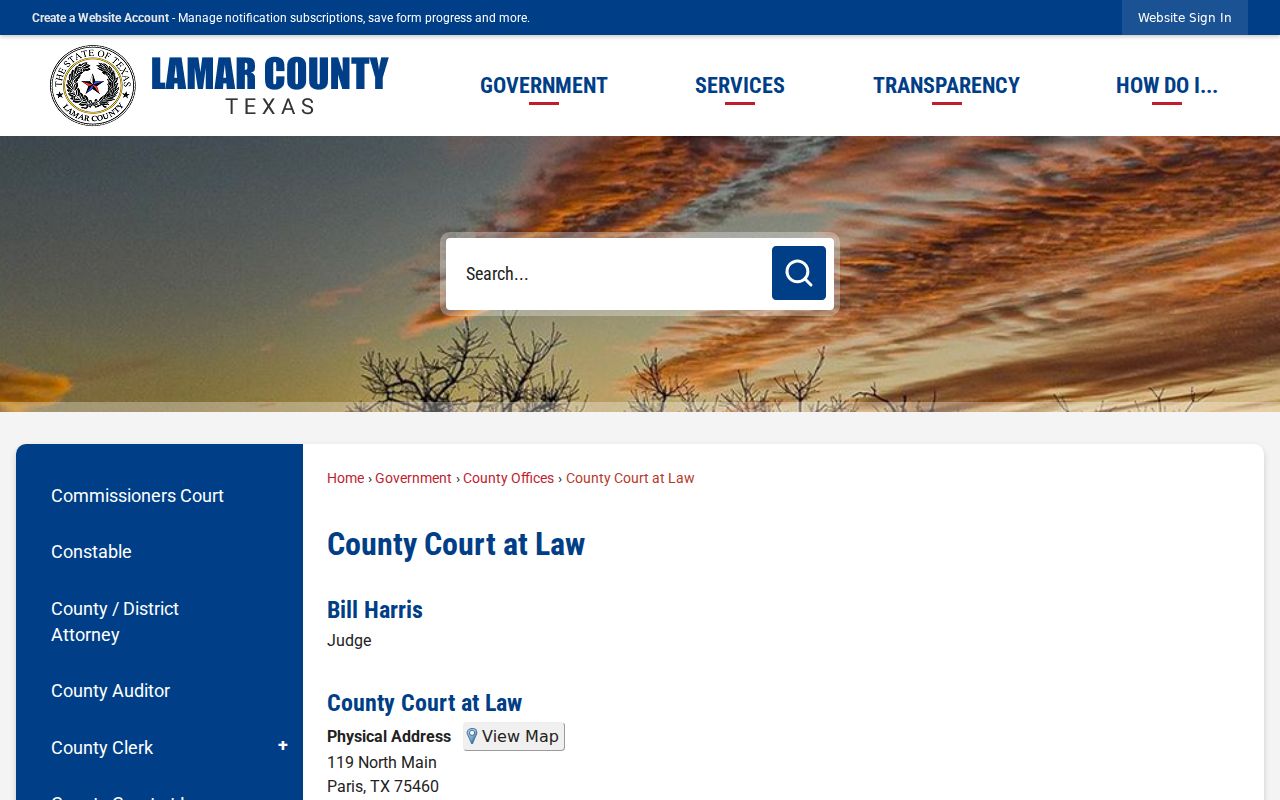
That distinction keeps a misdemeanor request from being sent to the District Clerk's felony counter.
Lamar County Court Case Portal
The County Clerk links the official Lamar County Tyler Public Access portal. It is the practical first stop for local criminal case information. Search controls can change with the live session, but the researched interface supports a case-record area, broad party-name searching, exact case numbers, filing-date ranges, and court or location filters when those controls appear. Search broadly first. A first name, filing year, or exact court can then reduce false matches.
The portal may display the court, case number, status, charge, filing date, party role, and register of actions. Images of filed papers may be absent or gated, so an online hit is an index to the clerk's file, not a promise that every page can be downloaded. Save the case number before leaving the result.
The official Tyler landing page is the source for the portal view shown here. Its local branding helps distinguish the Texas Lamar County system from similarly named counties elsewhere.
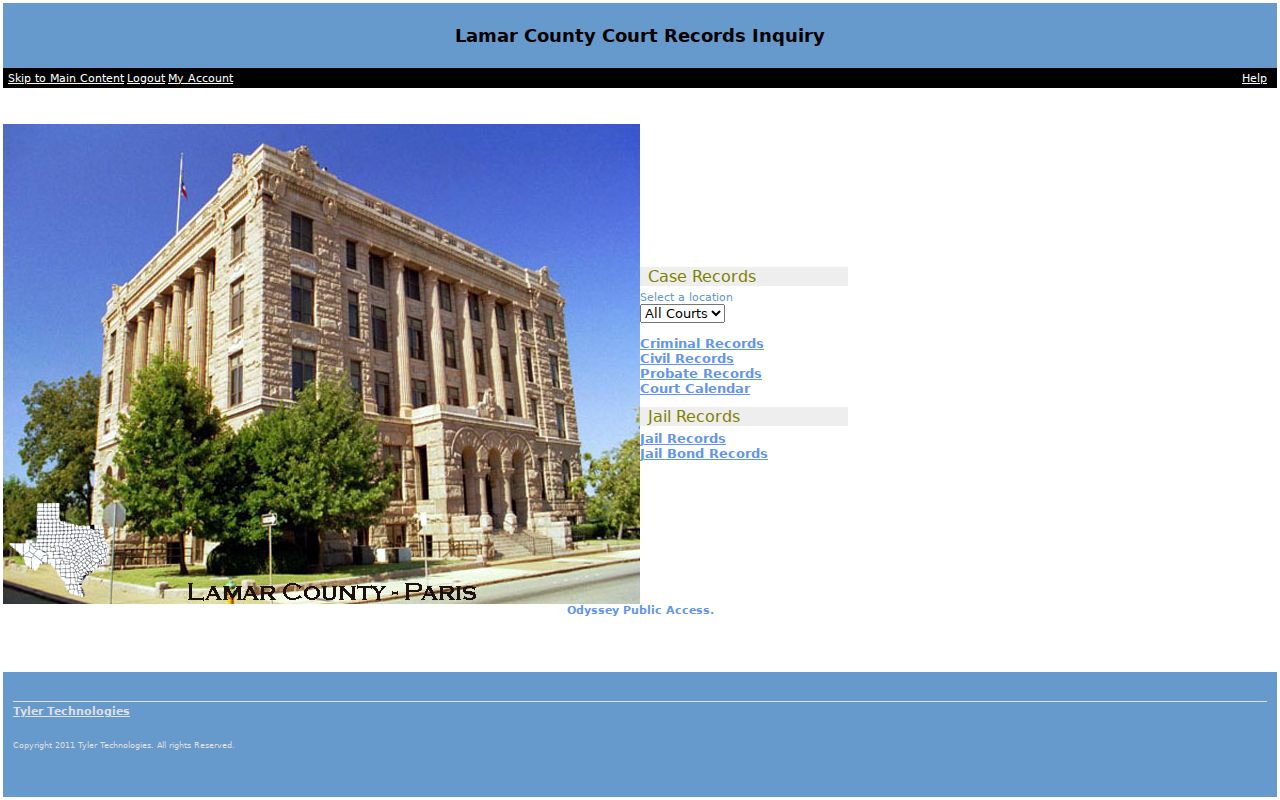
The portal is best used to identify a file before a call or copy request.
Lamar County Case Record Searches
A Lamar County court case lookup works best as a short verification chain. The local portal supplies leads, while the clerk supplies the complete or certified court record. Older, restricted, or not-yet-indexed matters may require a direct counter search. Use the result's court name rather than assuming the County Clerk and District Clerk can retrieve each other's cases.
- Open Tyler Public Access and select the criminal or case-information area offered by the live portal.
- Try an exact case number. If none is known, search the last name broadly and add the first name.
- Narrow candidates by filing dates and court or location when those controls are shown.
- Open the charge and register-of-actions views. Note the status, outcome date, and court.
- Ask the correct clerk for missing pages or a certified disposition, and confirm the current copy charge first.
The fields documented for the Lamar County portal are summarized below. Live controls may vary, so do not treat an absent filter as proof that the record itself is absent.
| Field Label | Type | Required | Notes |
|---|---|---|---|
| Search type / case records | Tab or menu | Yes | Choose the criminal or case-information area |
| Case Number | Text | No | Use the exact clerk-issued number when known |
| Last Name / Business Name | Text | No | Starts a broad party search |
| First Name | Text | No | Narrows a person search |
| Date Filed From / To | Date | No | Use when the live portal exposes the range |
| Court / Location | Dropdown | No | Choose the offered Lamar County court |
Lamar County Courts by Charge
The courthouse at 119 North Main Street in Paris holds most Lamar County court custodians, yet the correct counter still turns on jurisdiction. County Clerk Ruth Sisson's office handles County Court at Law files and answers 903-737-2420. District Clerk Shawntel Golden's office holds district felony files and answers 903-737-2427. Both offices operate on weekday schedules with a midday closure, though their exact counter hours differ.
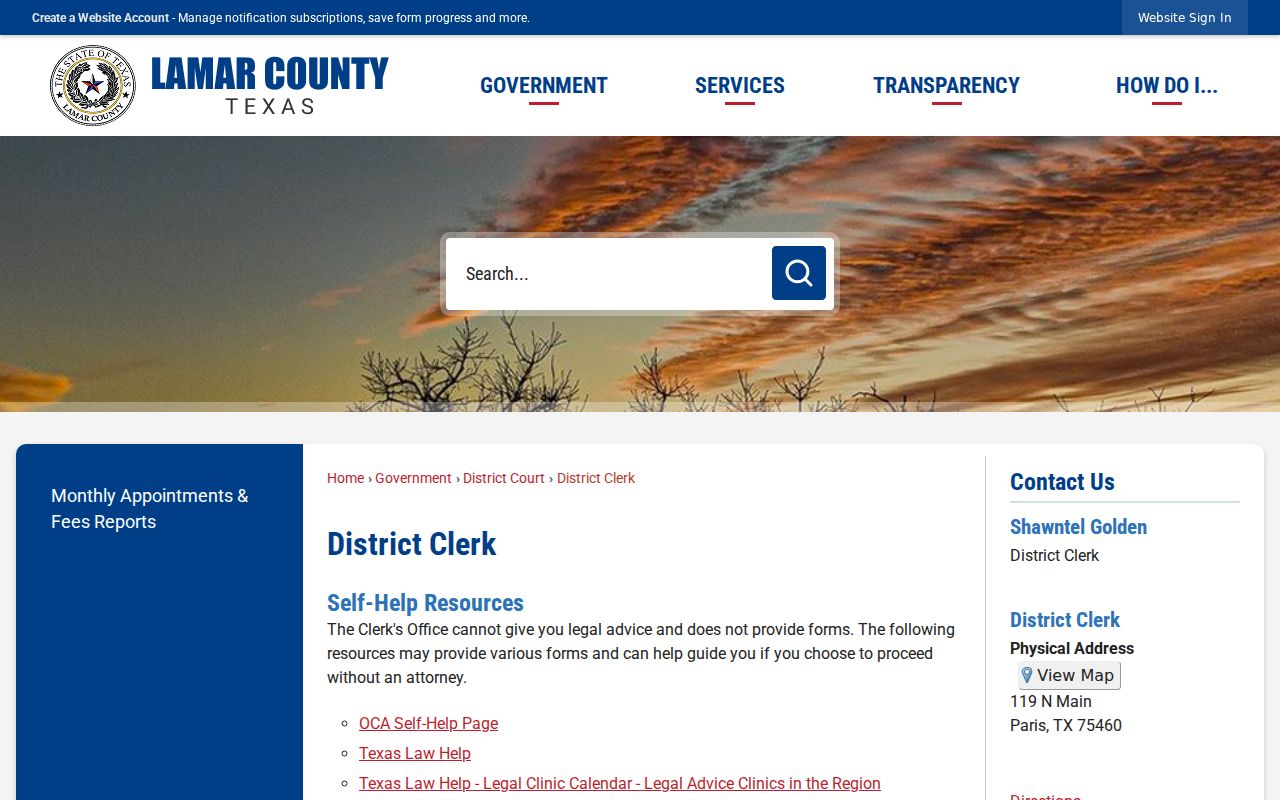
For the felony path, the District Clerk's official page is the source for the office view below. A caller should provide the case number, defendant name, and approximate filing year, then state whether a plain copy or a certified disposition is needed.
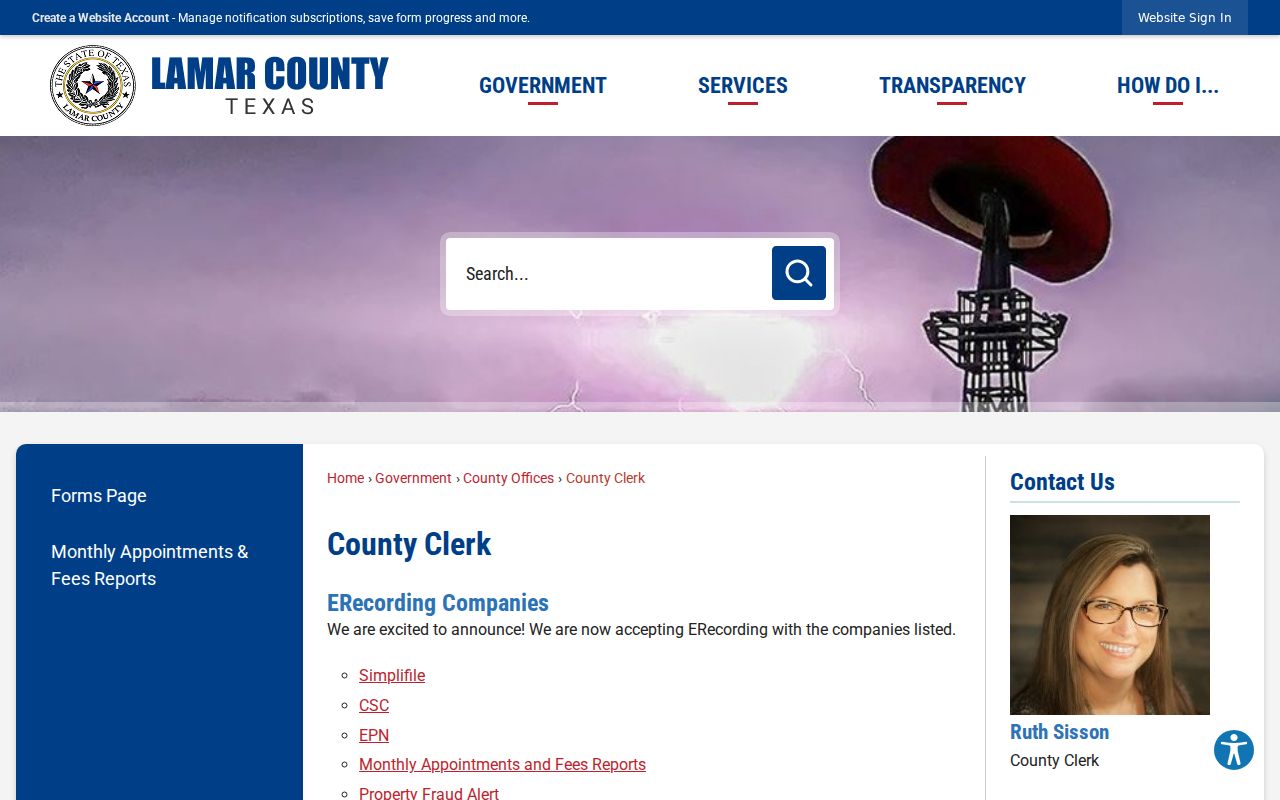
For county-level cases, the County Clerk page supplies the portal and office details reflected in the next image.
Fine-only Paris or precinct matters still require the municipal or proper JP clerk, even when the parties also appear in another Lamar County record.
What a Criminal Case File Contains
A Lamar County criminal case file records adjudication, which is the court's handling and outcome of a filed charge. It can identify the charging instrument, counsel roles, settings, motions, pleas, orders, disposition, sentence, costs, and warrant or bond events entered in the case. This differs from the jail booking record, which reflects intake allegations before the prosecutor has screened the facts.
The portal schema can expose the fields below, but exact content varies with case type and clerk entry. A missing document image does not erase the underlying paper or electronic file. Ask the custodian whether it can provide the pleading, judgment, sentence, or certified disposition needed for personal review or error correction.
| Case Number & Court | The unique file reference and the Lamar County court with jurisdiction |
|---|---|
| Charging Document | A complaint, information, or indictment stating the filed accusation |
| Docket Entries | The dated register of hearings, filings, motions, orders, and other events |
| Charge Details | The offense description, offense date, and class or degree when entered |
| Disposition & Judgment | The result for each charge and the date the court recorded it |
| Sentence & Costs | Confinement, supervision, financial balances, or other ordered terms |
Reading Lamar County Case Dockets
The register of actions is a dated event list, not a plain-language narrative. “Pending” means no final outcome is shown. “Dismissed” means the charge ended without a conviction, but it does not automatically erase an earlier arrest. “Deferred adjudication” means the court withheld a final conviction while supervision was imposed. An acquittal is a not-guilty result after trial, while a no-bill means the grand jury declined to indict.
- Information
- A prosecutor-filed charging paper used commonly for misdemeanors.
- Indictment
- A felony charging instrument returned by a grand jury.
- Disposition
- The recorded result of an individual charge.
- Capias
- Court process that commands an arrest, sometimes tied to a missed setting or fine judgment.
Read each charge separately. One Lamar County case can show different outcomes for different counts. Compare the outcome date with the judgment and sentence rather than relying on the first status label visible in a search list.
Criminal Case Stages in Lamar County
A Lamar County criminal case begins before the final court file is complete. After arrest and booking, a magistrate gives required warnings, reviews probable cause, and addresses bail. The prosecutor may reject the matter, file a misdemeanor information, or present a felony to a grand jury. Arraignment records the plea. Discovery, motions, and settings follow before a negotiated plea or trial. Judgment and sentencing come only after an outcome.
Case flow: Charges Filed › Arraignment › Pretrial › Plea or Trial › Disposition › Sentencing
Courts and prosecutors then report eligible dispositions to the Texas Department of Public Safety. A late or unmatched report can leave a gap between the Lamar County case file and a state criminal-history result. The certified clerk record is the key source when correcting such a mismatch.
Lamar County Charges Can Change
The charge entered at Brown Avenue booking reflects what law enforcement supplied at intake. It is not always the charge later filed in a Lamar County court. The County and District Attorney screens reports, files informations, presents felony matters to a grand jury, and may add, reduce, alter, or decline charges based on the evidence and law. The public eDiscovery link on the prosecutor's page is labeled for defense use and is not a public copy counter.
The Lamar County and District Attorney page is the source paired with the prosecutor image below. It helps identify the filing office, but readers seeking pleadings or judgments should still use the clerk that holds the case.
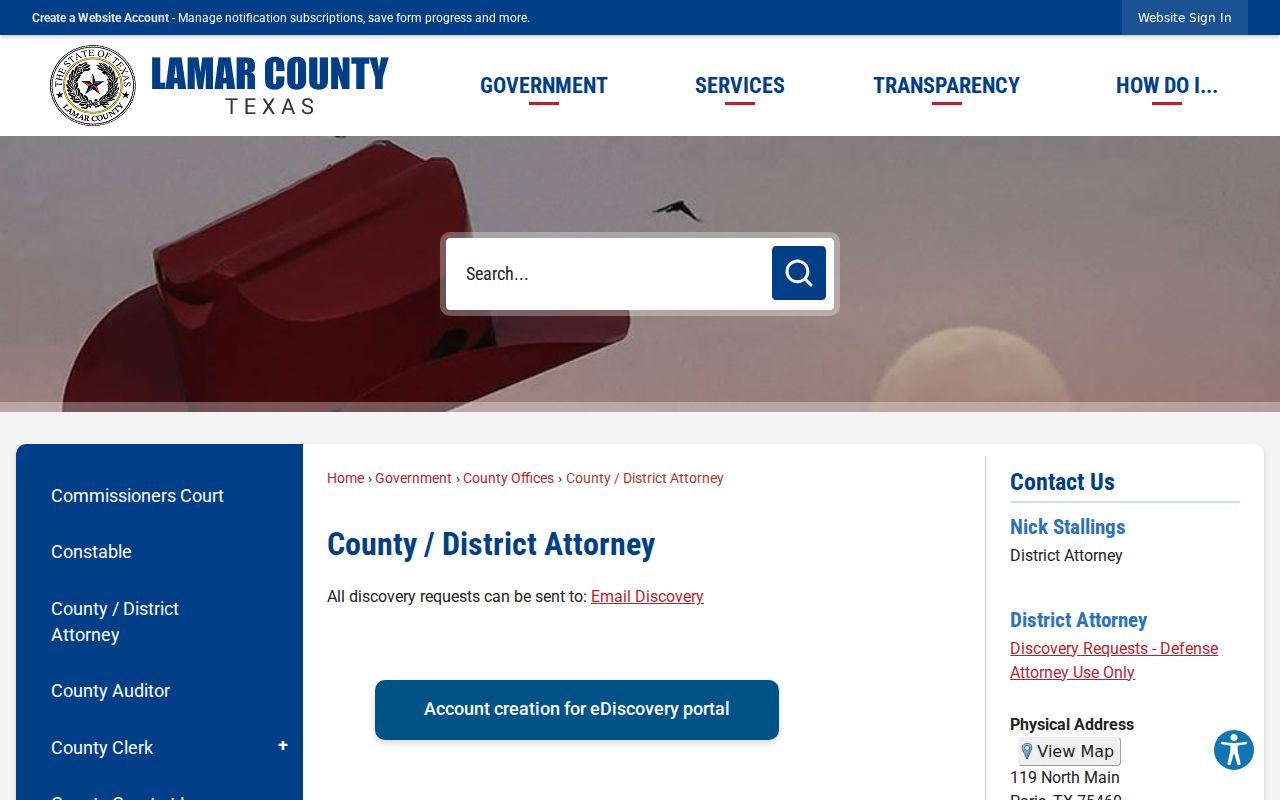
Compare the booking allegation with the filed charge and final disposition to avoid treating three different stages as one fact.
Access Rules for Case Records
Texas court records are generally open, but public access has firm limits. Juvenile material, victim and minor identifiers, sealed or expunged matters, sensitive personal data, and some active or restricted documents may be withheld or redacted. Texas Government Code Chapter 411 also controls criminal-history dissemination. A portal omission can reflect those rules, an older non-digitized file, a recent filing delay, or a search mismatch.
If a Lamar County case does not appear, contact the likely clerk with a narrow set of facts. Ask about a name search, the date range covered, current copy fees, and whether a file is restricted. For a fuller county-wide records path, the Lamar County criminal history overview explains how court, jail, and DPS sources answer different questions.
re:SearchTX Lamar Case Limits
re:SearchTX is Texas's statewide electronic court-record portal, but the Texas Judicial Council reported that the existing public collection excluded criminal records. That makes Lamar County's own Tyler Public Access portal and its clerks the practical criminal-case route. State integration work may change access over time, so check the live services rather than assuming statewide coverage.
The official re:SearchTX service supplied the state-access image below. Its presence does not mean it contains the complete Lamar County criminal docket.
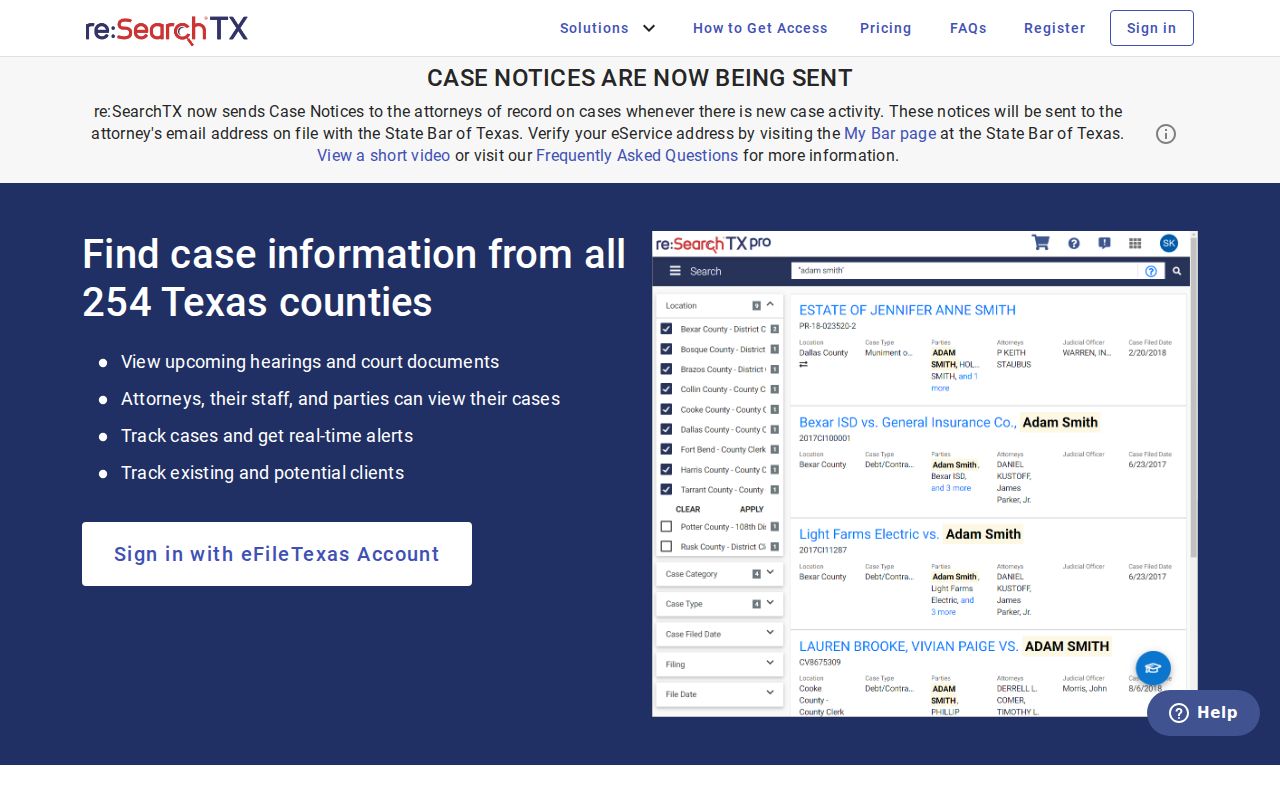
A sound search records the Tyler case number, verifies the correct Lamar County clerk, and obtains the needed court paper from that custodian.