
Lamar County Sex Offender Checks
The Texas Public Sex Offender Registry is the main official source for Lamar County. Texas DPS maintains the public system from data supplied and checked by local registration authorities. Start with a county filter when the goal is broad community awareness. Use an address and the live radius choices for a smaller area. A name search is best when the person is already known, while city and ZIP filters can help distinguish Paris from the county's smaller communities.
The Lamar County Sheriff is the local contact documented by the county. The office does not publish a separate registration-unit line, schedule, or fee. Call the main office at 903-737-2400 for local registration procedure or suspected noncompliance. Use 911 only for an emergency. Registry data may lag a recent move, and a missing result may reflect legal publication limits rather than a system promise that no record exists.
Lamar County Address Registry Search
County and address searches serve different aims. Selecting Lamar in the county field offers a broad list or map view when available. Entering a street address looks for published locations near one point, subject to the exact radius choices displayed by DPS. Do not assume a county result means a registrant lives near a specific home, school, or route. Open the individual profile and read the address type before using the result for safety planning.
The DPS registry landing page also provides the public notices that frame each Lamar County search. The official page is shown below without displaying or naming any private registrant.
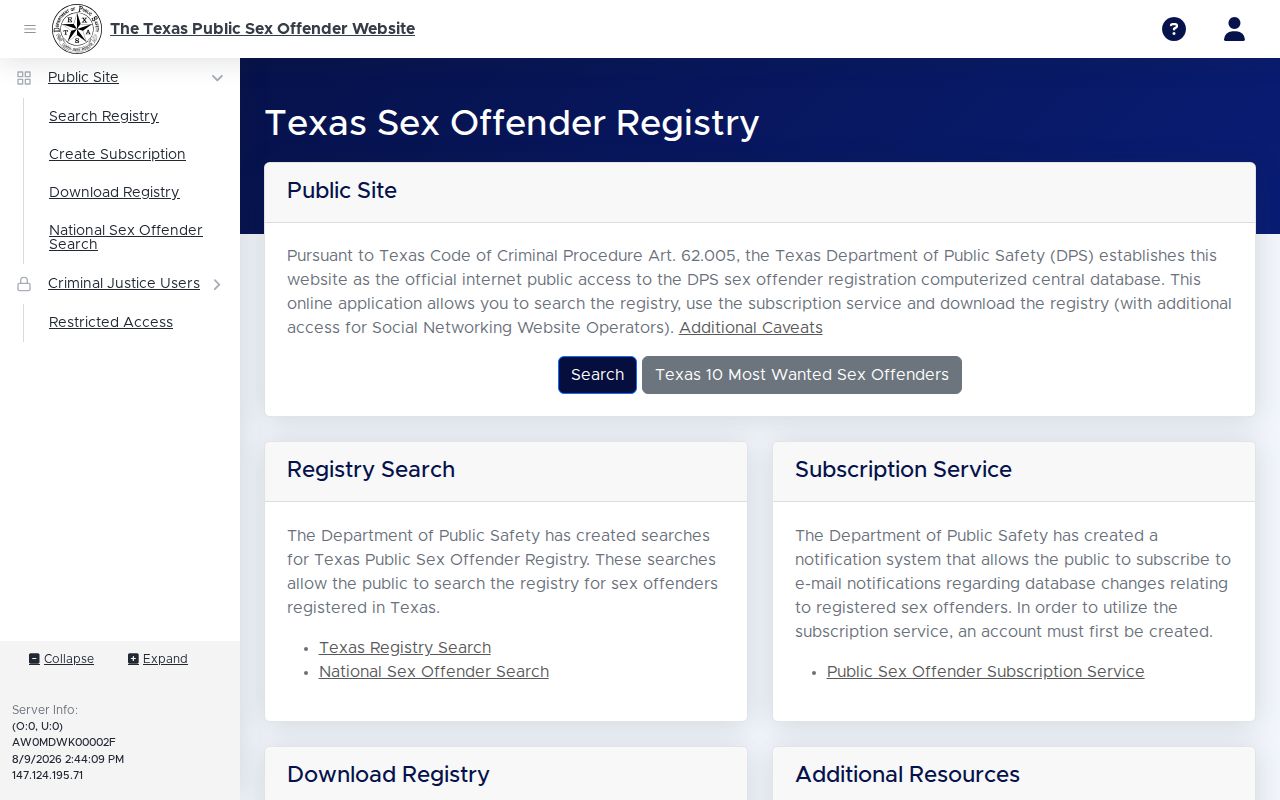
Those notices matter because registry results are safety information, not a forecast of present conduct or a permanent status certificate.
Texas Public Sex Offender Registry Searches
DPS provides several public paths into the same Texas registry. Choose the path that matches the fact already known. A broad Lamar County sex offender lookup can start with the county field, while a proximity question calls for the address route. Compare public identifiers with care because similar names and ages can cause mistaken assumptions.
- Open the official Texas registry and read its conditions of use.
- Select County and choose Lamar, or switch to name, address, city, ZIP, or map search.
- Run the search, then use the result list only to locate a likely public profile.
- Read the full profile, including status, address type, offense, and verification details.
- Use NSOPW for an interstate question and call the Sheriff about a Lamar County discrepancy.
The official Texas DPS search form shows the current controls. Radius options can change, so rely on the live menu rather than a saved list.
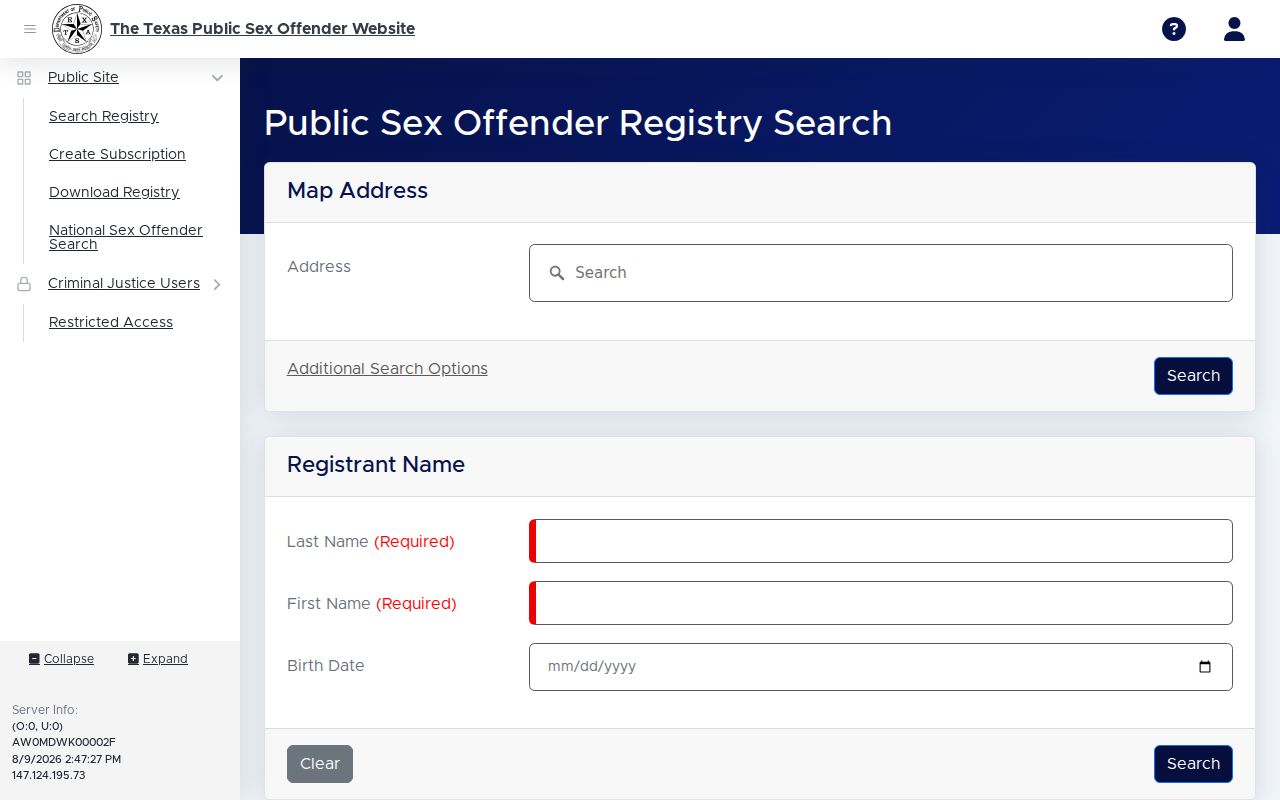
The form supports both broad Lamar County review and a more focused search when an address, city, ZIP code, or name is known.
| Field Label | Type | Required | Notes |
|---|---|---|---|
| Search by | Tab or menu | Yes | Name, address, county, city, ZIP, or map as offered |
| Last and first name | Text | Name route | First name narrows a last-name search |
| Address and radius | Text and select | Address route | Use only the radius options shown live |
| City, county, or ZIP | Text or select | Location route | Select Lamar for a county-wide result |
| Map or list | View toggle | No | Switches geography and result views if displayed |
Lamar County Sheriff Registry Contact
Texas DPS centralizes publication, but local law enforcement handles registration and verification work. Lamar County directs the public to the Sheriff's main office at 125 Brown Avenue in Paris. No official county page identifies a stand-alone registration counter, appointment calendar, or direct unit phone. Calling first avoids an unnecessary trip and gives staff a chance to route the question to the correct person.
Report an apparent address or compliance problem without confronting anyone. Give the office the public profile reference and the specific discrepancy observed. Staff can determine whether the matter reflects a recent update, an address type, a reporting delay, or a need for an official check. An emergency remains a 911 matter.
Registry Profiles: What They Show
A public profile combines identity descriptors with registration facts. Fields differ by the legal duty and by what the local authority has reported. Read the whole entry. A photo or address by itself does not explain registration status, the underlying offense, the date used to calculate the duty, or whether the address is described as a residence, temporary place, or another published type.
| Name and aliases | Published names and alternate names used to distinguish records |
|---|---|
| Photo and description | Recent public photo when available, plus age, sex, race, height, weight, hair, eyes, and marks |
| Address | Published location and address type, which should be read with verification details |
| Offense | Description, statute, adjudication or conviction date, and court or jurisdiction |
| Risk and duty | Texas numeric risk information, registration status, and verification requirement |
| Other public fields | Vehicles, school information, compliance data, and last verification when legally published |
Texas Code of Criminal Procedure Article 62.005 keeps specified data out of the public view. Protected items include Social Security and driver-license numbers, telephone numbers, employer information, certain online identifiers, and victim identity. Their absence is intentional, not a broken Lamar County profile.
Lamar County Registry Profile Boundaries
A registry profile is narrower than a court file. It does not replace the charging instrument, docket, judgment, or later orders kept by a clerk. It also does not show every fact known to law enforcement. Article 62.005 sets the public and protected boundary. That limit helps explain why a profile may name an offense and jurisdiction but omit contact, employer, victim, or investigative details.
For the filed case behind a Lamar County entry, the appropriate clerk remains the official source. County Court at Law records belong with the County Clerk, while district felony files belong with the District Clerk. The broader Lamar County court case lookup explains that split. Do not treat a registry screen as a substitute for the final court disposition.
Identity also needs care. A name, approximate age, or map point alone may not establish that a profile concerns the person someone has in mind. Compare the public photo and descriptors, but avoid copying a private person's details into a new list. The official profile is the place to check for changes.
Registration Levels and Duties in Texas
Texas risk labels and registration duration answer different questions. A low, moderate, or high numeric risk assessment relates to risk and notification. It is not the same as a federal SORNA Tier I, II, or III label. Duration comes from Chapter 62, the offense, the person's legal status, and the date from which the statute says time runs. The risk number alone cannot reveal whether a duty lasts ten years or for life.
| Concept | Duration or Role | How to Read It |
|---|---|---|
| Low, moderate, or high risk | Risk and notification indicator | Not a federal SORNA tier and not a duration rule |
| Ten-year duty | Limited statutory category | Generally runs through the tenth anniversary after release or discharge |
| Lifetime duty | Chapter 62 lifetime category | Verification may be annual or more frequent based on status and law |
| Special status | Enhanced duties may apply | Check the live profile and the governing statute |
Consult the current text of Texas Code of Criminal Procedure Chapter 62 for the listed offense and dates. A saved Lamar County result can go stale as addresses, compliance data, or legal status change.
Lamar County Registry Risk Terms
Three terms often get blended in casual searches. Risk level is a Texas assessment and notification measure. Registration status reflects the public duty and reported compliance information. Verification shows when the local authority last confirmed required facts and how often a person must report. None of those fields is a stand-alone forecast of conduct.
- Address type
- The registry's label for the kind of published location, read with status and verification data.
- Verification
- The local process for confirming required registration facts on the statutory schedule.
- Numeric risk level
- A Texas risk and notification indicator that does not set the duty's length by itself.
- Registration status
- The reported state of the person's legal registration duty and compliance information.
When two fields appear to conflict, return to the live DPS entry before calling the Lamar County Sheriff. A cached result, old screen capture, or third-party copy may no longer reflect the official record.
Using Registry Information Lawfully
Texas publishes registry information to support public awareness and safety planning. Use it to learn what the official record says, discuss family safety, and make a calm plan for the area being reviewed. Do not use the list to shame, follow, threaten, or confront a person or household. A result should prompt careful review of the official profile, not a public accusation.
Misuse warning: Misusing registry information to threaten, harass, intimidate, or commit a crime is unlawful under Texas Code of Criminal Procedure Chapter 62.
Community notice and public web access do not turn the data into a private enforcement tool. Schools and local authorities may receive or give notice when Chapter 62 requires it. For an apparent Lamar County compliance issue, give facts to law enforcement and let the proper agency investigate. If there is an immediate threat, call 911.
Lamar County Interstate Registry Checks
A Texas-only search can miss a person who moved across a state line or has a registration record in another participating jurisdiction. The Dru Sjodin National Sex Offender Public Website supplies the federal cross-state layer. It queries public registries from participating jurisdictions. Use it after the Texas search when the facts involve a recent move, travel between states, or a prior out-of-state address.
The national search interface is shown below as an official route for a wider query. It should not replace the detailed Texas profile for a Lamar County record.
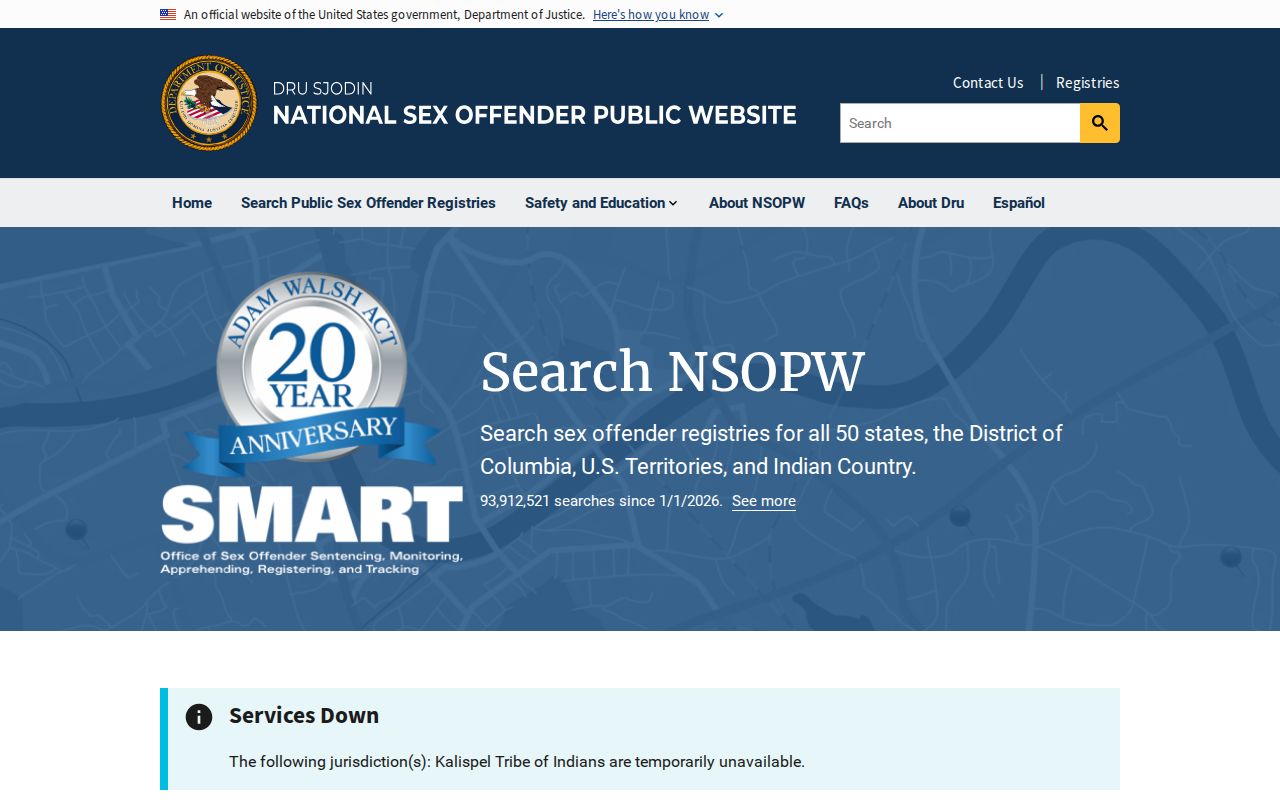
When NSOPW points back to Texas, open the source profile and read the current Lamar County registration facts there.
Lamar County Registry Discrepancy Reports
If a public entry seems wrong, do not try to settle the question through a visit or direct message. Record the official page, note the exact public field at issue, and call the Lamar County Sheriff at 903-737-2400. A useful report describes an apparent address conflict, status concern, or recent change without adding rumor. The office can check its local registration role and decide what action is proper.
DPS receives registry data from local authorities and publishes the state system. That division of work means some changes take time to appear. It also means a screenshot is only a dated snapshot. Check the live profile again before making a report, and give the Sheriff enough detail to locate the public record without broadcasting it elsewhere.
For a possible move outside Texas, compare NSOPW and the other state's official registry. For a Lamar County emergency, call 911. For all other compliance questions, a calm report to law enforcement protects both public safety and the integrity of the record.