
Reno Criminal History Checks
A useful Reno record check starts by defining the Reno record. A Reno incident report stays with the agency that created it. A Reno booking belongs to Lamar County Jail after the jail accepts the person. Fine-only Reno matters follow Reno's municipal arrangement, while Class A or B misdemeanors and felonies move into county courts. The Texas Department of Public Safety maintains a separate statewide criminal-history system. Each source answers a different question, so a missing Reno result in one place is not a clean bill from every other custodian.
Use this five-part route when the starting number or office is unclear:
- Use the official Reno city website and current directory to identify the city office or commissioned agency that handled the event.
- Submit a focused written request to that record creator for the releasable police or incident report.
- Confirm the court named on a citation before seeking a fine-only municipal file.
- For custody or higher-level charges, call Lamar County Jail and search the county Tyler court portal after filing.
- Use Texas DPS for public reported convictions and deferred adjudications, or FAST fingerprints to review your own fuller Texas record.
Write down each identifier you receive. An incident number, booking number, court case number, and DPS tracking identifier are not interchangeable. Keeping the office name beside each number prevents a Reno records search from being sent to the wrong counter.
Reno Records Without an Arrest Portal
No official Reno police records page, Reno arrest blotter, downloadable Reno request form, or municipal case-search portal was verified in the research. That gap should shape the Reno search. It does not prove that a Reno record does not exist. It means a requester must identify the Reno custodian through the current city directory, state the incident facts in writing, and ask for an existing record instead of asking staff to research or create a report.
A precise request gives the approximate date, location, responding agency, incident or citation number if known, subject name, and the exact document sought. Ask the city which office actually holds the record before sending money or identification. The Texas Public Information Act covers existing government information subject to its exceptions. Active-investigation details, juvenile data, victim information, and other protected material may be withheld or redacted.
The official Reno municipal source shows the proper local starting point.

This city-level source is more reliable for current Reno contacts than routing a request to a nearby agency based only on geography.
Records at the Reno Police Department
Start with the Reno city directory when a police stop, call for service, crash, or incident occurred inside the city. Confirm whether a Reno officer or another commissioned agency made the report. The record creator normally keeps the offense or arrest narrative. Do not send a Reno request to Paris Police merely because Paris is close and has a detailed online records page. Paris Police is not the default custodian for incidents handled in Reno.
Ask for basic public information tied to a named Reno event. Useful details include the date, approximate time, Reno location, report number, and type of document. If media such as body-camera video or dispatch audio is sought, describe the Reno event with enough detail for staff to locate existing files. Such material can require review and redaction. Request a cost estimate before agreeing to production when Reno has not published a stable fee schedule.
Note: Reno has no verified public records app, so a claimed app-only arrest or warrant tool should be checked against the official city directory.
Reno City Records or County Cases
The charge level determines where a Reno court record goes. A fine-only Reno ordinance or Class C matter may stay with the municipal or justice court named on the citation. Class A and B Reno misdemeanors ordinarily go to Lamar County Court at Law, where the County Clerk keeps the file. Reno felonies proceed in the 6th or 62nd District Court, with the District Clerk as custodian. A broad name search can miss a Reno case when it is aimed at the wrong court level.
The distinctions are practical, not just legal labels:
| Reno event | Likely record holder | Best next fact |
|---|---|---|
| City ordinance or fine-only citation | Court shown on citation | Citation or docket number |
| Class A or B misdemeanor filing | Lamar County Clerk | County Court at Law case number |
| Felony filing | Lamar District Clerk | District court and case number |
| Recent custody | Lamar County Jail Administration | Booking status and arresting agency |
A citation's issuing court is the safest starting clue. A police report and a later court file may use different charge language because prosecutors can reject, add, reduce, or change a charge before filing.
Booking and Arrest Records in Reno
A Reno arrest may create records at several stops. The arresting agency creates its report. Lamar County Jail creates the booking and custody file after acceptance at 125 Brown Avenue in Paris. A prosecutor and clerk create the court record if a charge is filed. DPS receives a fingerprint-linked arrest cycle for reportable offenses and later relies on agencies and courts to submit the disposition. An arrest entry alone is an allegation, not proof of guilt.
Lamar County publishes no verified online Texas jail roster or daily booking log. For current custody, contact Lamar County Jail Administration at 903-737-2404. For a formal booking record, use a focused written request to the Sheriff's Office. Once a case has been filed, the county Tyler portal may show the court, case number, filed charge, dates, status, docket events, and disposition. A recent booking may appear before the clerk has opened the court file, so timing explains some empty searches.
Reno Stops to County Booking
The Reno-to-county path begins with legal authority for the arrest. Jail staff then verify the authority, record identifiers, inventory property, enter the arresting agency and intake charges, take fingerprints and a photograph, and conduct screening. A magistrate handles warnings, probable cause, and bail. The person may post an authorized bond, remain in custody, serve a county sentence, or later transfer.
Local custody flow: Reno incident › responding agency report › Lamar County Jail booking › magistrate review › clerk filing.
If the person later enters state prison, use TDCJ Inmate Search rather than the county line. The TDCJ Parole Division directory also identifies the Paris District Parole Office as the office serving Lamar County.
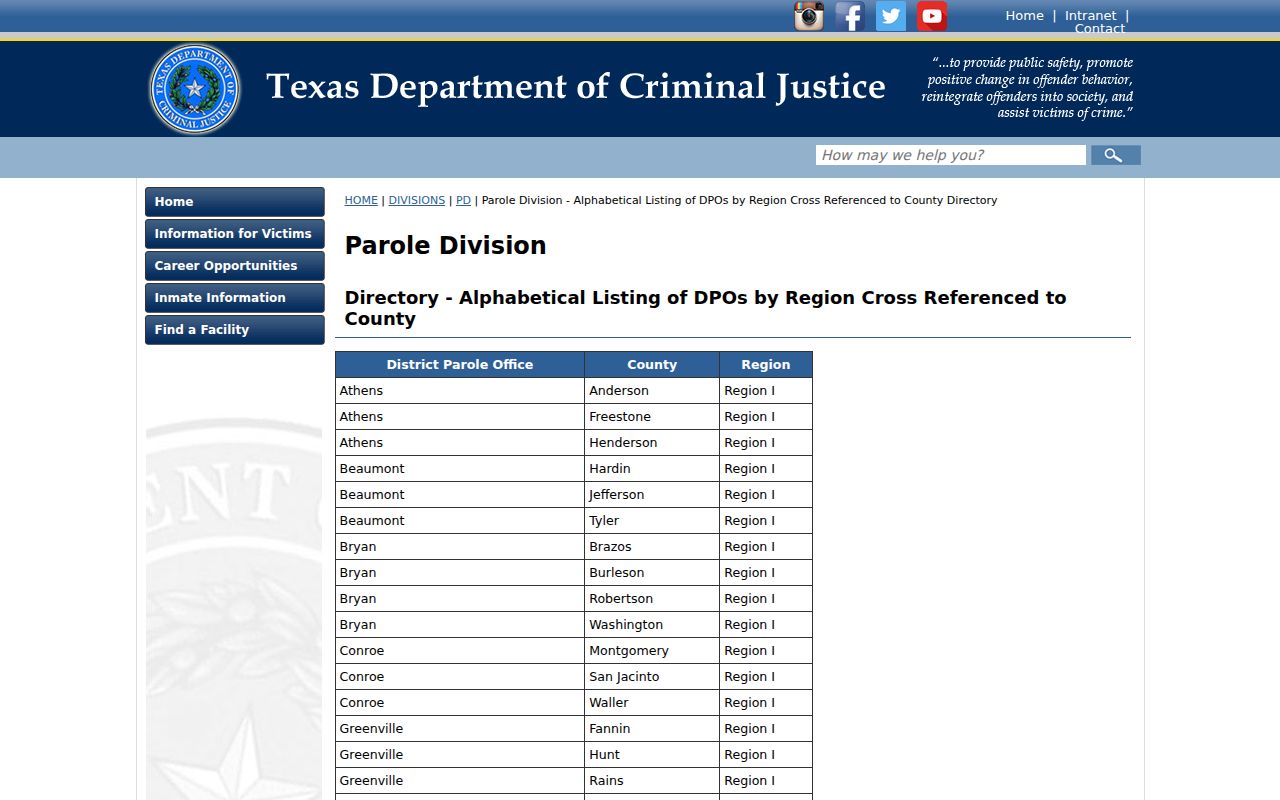
The statewide supervision listing is a later layer in the record trail, not a substitute for the Reno report or Lamar County booking.
The Reno Municipal Court File
No stable official Reno municipal case lookup, judge listing, copy fee, or court-search URL was verified. Confirm Reno's current municipal arrangement through the city and use the court printed on the citation. A fine-only matter can remain outside the Lamar County Court at Law and district-court path. Calling a county clerk first may therefore produce no result even though the issuing court holds an active file.
A Reno municipal file commonly centers on the Reno citation, docket, plea, settings, judgment, payments, and any court-issued warrant. Exact fields and copy options depend on Reno's current arrangement.
| Court Name | Confirm the court shown on the Reno citation or through the current city directory. |
|---|---|
| Case Types Heard | Fine-only ordinance or Class C matters within the court's lawful jurisdiction. |
| Case Lookup Channel | Phone or clerk counter; no verified public Reno portal was located. |
| What the Docket Shows | Citation, settings, plea, judgment, payments, and warrant events when entered. |
| Copies & Fees | Ask the current clerk before ordering because no stable Reno fee was verified. |
Fine-Only Reno Criminal Records
Texas classification explains why Reno records split. A Class C misdemeanor ordinarily carries a fine-only range and may be handled by a municipal or justice court. Class A and B misdemeanors can include jail exposure and ordinarily move through Lamar County Court at Law. Felonies belong in district court. Enhancements and the specific offense statute can alter the level, so the citation, charging instrument, and judgment matter more than a casual label.
If a Reno citation lists a justice court, use that named JP office. Lamar County has six JP places. Their proceedings, warrants, and payment records are not guaranteed to appear in a Reno city system. If a filed charge rises to County Court at Law or district court, the case number and clerk change. This is why the same event may leave both a Reno agency incident number and a Lamar County case number.
How Reno Records Reach the County
A city report moves into county systems only when later action calls for it. Booking staff create custody data. Prosecutors decide whether and how to file charges. The County Clerk preserves County Court at Law misdemeanor cases, while the District Clerk preserves felony files in the district courts. Courts report final outcomes back to DPS so they can be linked to the fingerprint arrest cycle. Late or unmatched disposition reporting can leave gaps in the statewide history.
Record flow: Reno responding agency › Lamar County Courts › Texas Department of Public Safety Crime Records Division.
For a recent Reno event, begin with the city source and jail. For the filed charge and final outcome, use the court file. For statewide public conviction and deferred-adjudication information, use DPS. Fingerprints are the only positive identity link, and a name search can miss the right person or join the wrong one.
Reno Tyler Case Search Handoff
After a Reno matter is filed at county level, search the Lamar County Tyler Public Access portal. Start broadly with a last name, then narrow with a first name, date range, case number, or court when the live controls allow. Save the case number and court before leaving the result. Open the register of actions and charge or disposition views when available.
The portal can show the filed charge, dates, status, hearings, docket entries, outcome, sentence, and warrant or bond events when entered. It may not show all documents. Older, sealed, expunged, juvenile, or confidential material may be absent. Contact the County Clerk at 903-737-2420 for County Court at Law records or the District Clerk at 903-737-2427 for felony files and certified copies.
Note: A blank Tyler result soon after a Reno booking can mean the prosecutor and clerk have not yet created the court case.
Reno Federal Criminal Records Stay Separate
Federal prosecutions arising from the region do not become Lamar County prosecutions. Lamar County lies in the Eastern District of Texas, and federal cases use federal court channels. PACER is the official federal case search, while the Bureau of Prisons locator covers federal custody. Neither source should be used as a replacement for a Reno incident report, county booking, or Texas court file.
The U.S. District Court for the Eastern District of Texas publishes current court and division information.
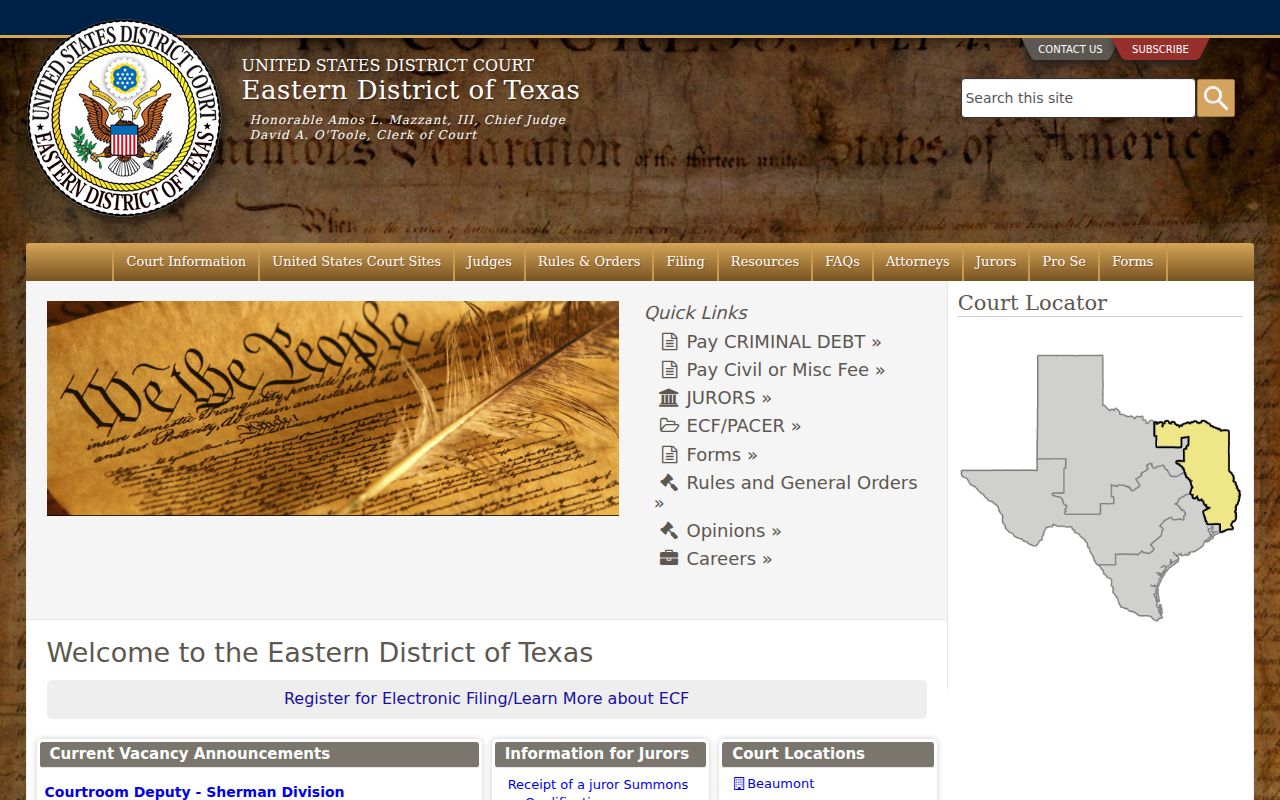
This federal layer matters only when the event was investigated or charged under federal authority.
Older Reno Records and Missing Results
When no Reno portal exists, older records require a careful paper trail. Start with the current city directory and ask which office kept records for the relevant year. Give the event date, address, involved agency, and any known number. If the city does not hold the file, ask which custodian received it. Do not assume Paris Police took custody merely because Reno is adjacent to Paris along the US 82 corridor.
For an older Reno county filing, call the correct Lamar clerk with the approximate filing year and name. If your own DPS history lacks a Reno disposition, obtain a certified disposition from the court and follow the DPS Crime Records Error Resolution process. A Reno dismissal does not erase the arrest or booking by itself. Texas expunction under Chapter 55A or an order of nondisclosure under Government Code Chapter 411 requires a separate legal process and depends on the facts of the Reno case.
Reno Record Access Rules
Texas law starts from public access but protects specific records and fields. A Reno office may release basic public information while withholding material tied to an active investigation, juveniles, victims, sealed cases, or confidential identifiers. Courts provide judicial records through their clerks. DPS controls criminal-history dissemination separately, and its public name product is narrower than a person's fingerprint-linked state record.
Key Statutes:
Texas Government Code Chapter 552 establishes the Texas Public Information Act and its access framework.
Texas Government Code Chapter 411 governs criminal-history dissemination and orders of nondisclosure.
Texas Code of Criminal Procedure Chapter 55A sets the process for qualifying expunctions.
Verify identity and status with the office that maintains the original record. A name match is not positive identification, and a pending charge is not a conviction.